Provenzan Salvani
Provenzan Salvani is a proud Sienese nobleman encountered by Dante on the First Terrace of Purgatory, where the sin of Pride is purged. His presence there, despite his deathbed repentance having been delayed until the very end of his life, is explained by a single, extraordinary act of self-abasing charity performed years before his death—an act that Dante's guide Oderisi d'Agobbio recounts as a model of how humility can shorten the long waiting period otherwise required for the contumacious. His story illustrates the power of a single, radical deed of humility to override the normal temporal penalties of Purgatory.
Identity and Background
Provenzan Salvani was a powerful Sienese leader who, during his lifetime, "had presumed to bring Siena all into his hands." His ambition and arrogance were so great that, as Oderisi tells Dante, "all Tuscany resounded" with his name. He was a figure of immense worldly pride, and his sin was so severe that, under the normal rules of Purgatory, he would have been required to wait outside the gate for a period equal to his entire life before even beginning his purgation. This is because he died in contumacy of Holy Church, repenting only at the very last moment.
The Act of Humility
Despite his proud life, Provenzan performed one act that redeemed him from the long delay. When his friend was imprisoned by Charles of Anjou and held for ransom, Provenzan, "in greatest splendour," went to the Campo of Siena, the city's main square. There, "all shame being laid aside, he placed himself" and begged for alms to raise the money for his friend's release. Oderisi emphasizes the physical and psychological cost: "he brought himself to tremble in each vein." This public, voluntary humiliation, undertaken for the sake of another, was so powerful that it "released him from those confines"—the long waiting period in Ante-Purgatory—and allowed him to begin his purgation immediately upon death.
Encounter with Dante
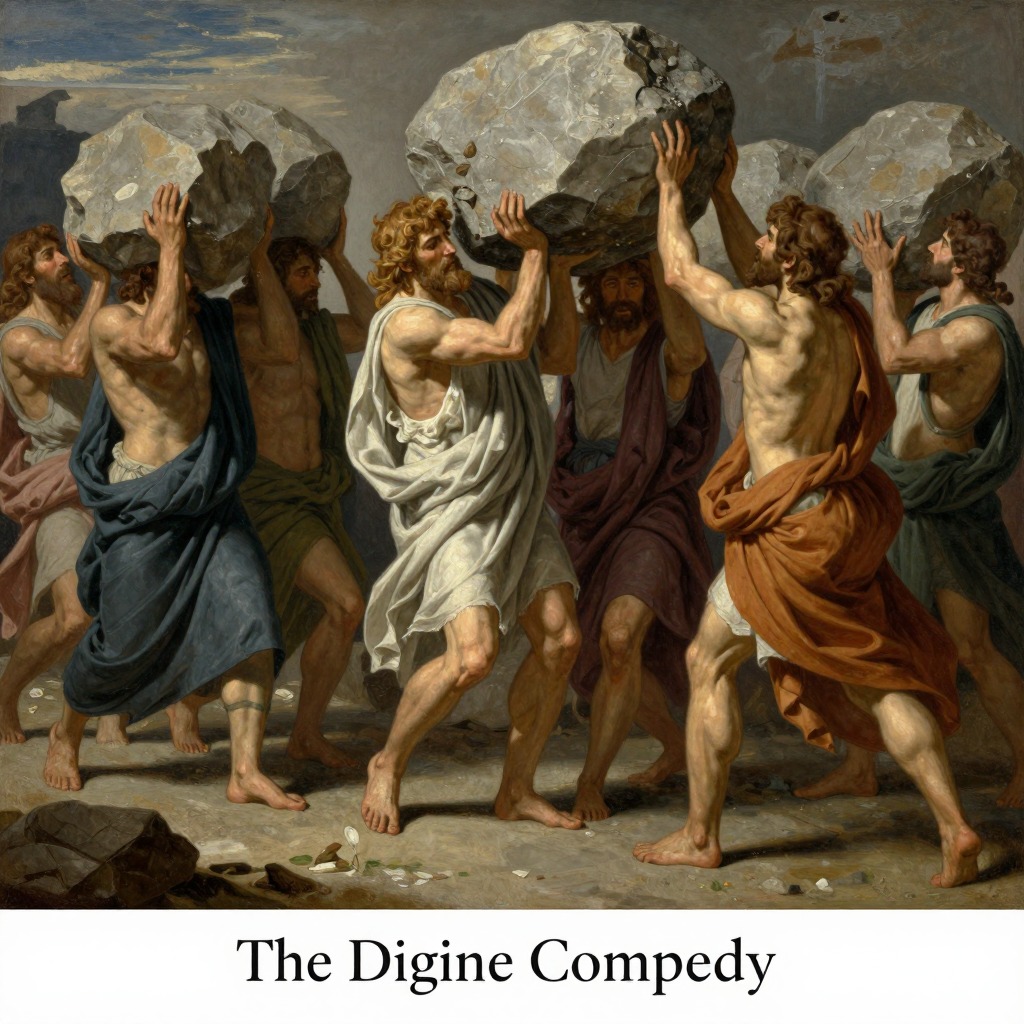
Dante encounters Provenzan among the proud, who are bent double under massive stones. The pilgrim does not recognize him at first, but Oderisi points him out. When Dante asks how Provenzan could have ascended to Purgatory so quickly, given that he repented only at the end of his life, Oderisi explains the saving power of the Campo episode. The explanation is given in deliberately obscure terms—"I say no more, and know that I speak darkly"—but Oderisi assures Dante that events in his own future will make the meaning clear.
Thematic Significance
Provenzan Salvani's story serves as a powerful counterpoint to the sin of Pride. It demonstrates that the very virtue of humility, which the proud lack, can be the instrument of their salvation. His act of begging in the public square is a direct inversion of his former arrogance: the man who once sought to control all of Siena now humbles himself before its citizens. The episode also reinforces the Purgatorial theme that the prayers and good deeds of the living can shorten the suffering of the dead, and that a single, radical act of charity can outweigh a lifetime of sin. Provenzan's presence on the Terrace of Pride, rather than in Ante-Purgatory, is a testament to the transformative power of that one moment of self-abasement.